

Urinary Tract Infection (UTI): Causes, Symptoms & What You Need to Know
A complete guide to understanding UTI in both males and females — from causes and risk factors to symptoms and when to see a doctor.
What Is a Urinary Tract Infection (UTI)?
A Urinary Tract Infection (UTI) is a bacterial or, less commonly, fungal infection that affects any part of the urinary system. This includes the bladder (cystitis), urethra (urethritis), prostate (prostatitis) in males, and in more serious cases, the kidneys (pyelonephritis).
UTIs are one of the most common infections worldwide, particularly affecting women. However, they can also occur in men — and when they do, they often signal an underlying medical issue that needs investigation.
The most common causative organism of UTI is Escherichia coli (E. coli), responsible for nearly 80% of all community-acquired cases.
UTI in Females — Why Is It So Common?
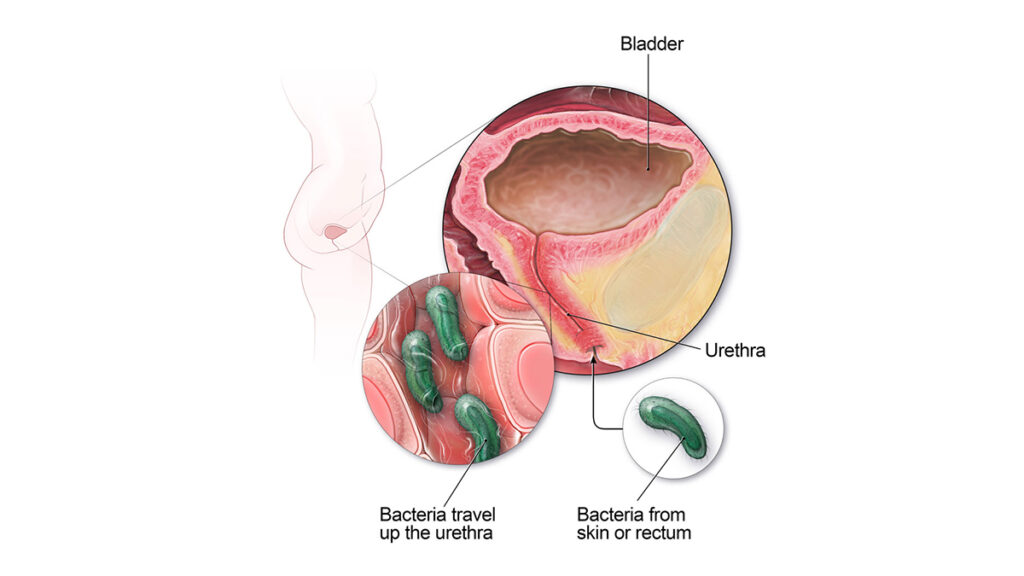
UTIs are significantly more prevalent in females, and the primary reason is anatomy. The female urethra is much shorter than the male urethra, which allows bacteria from the vagina or anal region to travel more easily into the bladder.
⚠️ Key Risk Factors in Women
Sexually Active Women
- Sexual intercourse can introduce bacteria into the urethra
- Often called “Honeymoon Cystitis”
- Urinating after intercourse helps reduce risk
Post-Menopausal Women
- Declining estrogen levels cause vaginal and urethral dryness
- Dry mucosa loses its natural protective barrier
- Makes it easier for bacteria to colonize
In otherwise healthy women, a UTI is classified as a simple (uncomplicated) UTI and can usually be treated with a short course of antibiotics without further investigation.
UTI in Males — Why It’s Always Taken Seriously
Due to the significantly longer male urethra, bacteria have a much harder time reaching the bladder. This is why UTIs are far less common in men — and when they do occur, they are automatically classified as complicated UTIs, meaning a doctor must investigate the underlying cause.
Any UTI in a male patient should be thoroughly evaluated. Never ignore a UTI in a man — it almost always points to a structural, hormonal, or infectious underlying problem.
🔍 Common Causes of UTI in Males
Enlarged Prostate (BPH)
- Prostate enlargement compresses the urethra
- Causes urinary retention (incomplete bladder emptying)
- Stagnant urine becomes a breeding ground for bacteria
Urethral Stricture
- A narrowing or blockage within the urethra
- Slows or obstructs normal urine flow
- May result from injury, infection, or inflammation
Bladder Stones
- Mineral deposits accumulate in the bladder
- Create irritation and harbour bacteria
- Can also obstruct urine outflow
Constipation
- One of the most commonly overlooked causes
- A full rectum compresses the bladder and urethra
- Leads to incomplete urination and bacterial growth
Common Symptoms of Urinary Tract Infection
The symptoms of UTI are largely the same in both males and females. Here are the most important signs to watch out for:
- Burning Sensation During Urination (Dysuria)A painful, burning feeling when passing urine — the hallmark symptom of UTI
- Increased Frequency of UrinationNeeding to urinate every 30–60 minutes throughout the day, even when very little urine is passed
- Nocturia (Waking Up at Night to Urinate)Getting up 4–5 times at night to urinate, significantly disrupting sleep
- Urgency (Inability to Hold Urine)A sudden, intense urge to urinate that is very difficult to defer for more than 10–15 minutes
- Fever (Occasional)Less common in simple lower UTIs, but fever, chills, or flank pain may indicate the infection has spread to the kidneys (pyelonephritis)
If you experience high fever, severe back or side pain, nausea/vomiting alongside urinary symptoms — seek medical care immediately. This may indicate a kidney infection, which requires prompt treatment.
Frequently Asked Questions (FAQs)
🔑 Key Takeaways
- UTI is a bacterial or fungal infection of the bladder, urethra, or prostate
- Females are more prone due to their shorter urethra — UTI in women is classified as simple and treated with short-course antibiotics
- UTI in males is uncommon and always considered complicated — an underlying cause must be identified
- Common male causes include enlarged prostate, urethral stricture, bladder stones, and constipation
- Key symptoms: burning urination, increased frequency, nocturia, urgency, and occasionally fever
- Fever + flank pain = possible kidney involvement — seek medical attention immediately