

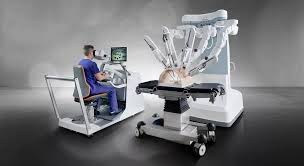
Hello, I am Dr. Likhiteswer, Consultant Urologist and Uro-Oncologist based in Hyderabad. In this blog, I will walk you through the world of robotic surgery — what a robotic system actually is, the different types available today, and what really happens inside an operating theatre during a robotic procedure.
If you or a loved one has been advised to undergo robotic surgery, this guide will help you understand the technology behind it and feel more confident about your treatment journey.
What Is Robotic Surgery?
Robotic surgery is a form of minimally invasive surgery where the surgeon uses a robotic system to perform the procedure with greater precision, control, and visibility than traditional methods. Despite what the name suggests, the “robot” does not operate on its own — it acts as a sophisticated extension of the surgeon’s hands.
This technology has transformed many surgical fields — especially urology, gynaecology, and general surgery — by allowing complex operations to be done through tiny incisions, with less pain and faster recovery for the patient.
The 3 Types of Robotic Surgical Systems
Not all surgical robots are the same. Broadly, there are three categories of robotic systems used (or being developed) in medicine today.
1. Master-Slave Robotic Systems
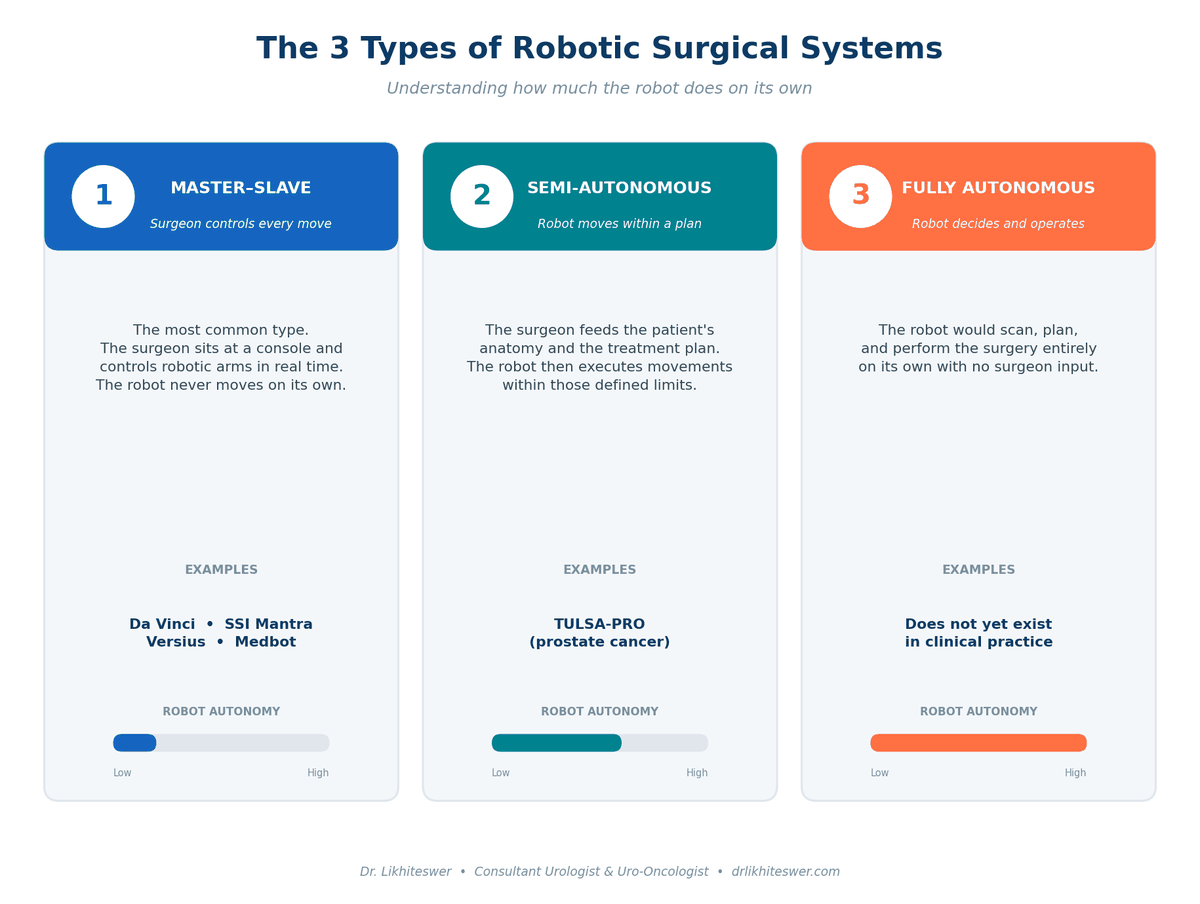
This is the most common type of surgical robot. When people talk about “robotic surgery”, they are almost always referring to a master-slave system.
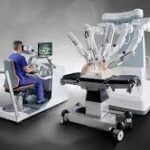
In a master-slave system, the robot does not think or move on its own. The surgeon sits at a console a few feet away from the operating table and controls the robot using hand controls (often described as joysticks). Every movement the surgeon makes is mirrored — and refined — by the robotic arms inside the patient’s body.
Key features:
- The surgeon is in complete control at all times
- Tremor filtration and motion scaling make movements more precise
- 3D high-definition vision gives a magnified view of the surgical field
- The surgeon’s wrist movements are translated into instrument tip movements with a greater range of motion than the human hand
Examples of master-slave robotic systems include:
- Da Vinci Surgical System — the pioneer and most widely used robotic platform in the world
- SSI Mantra — an Indian-developed robotic surgical system
- Versius — a modular robotic system
- Medbot and other emerging platforms
2. Semi-Autonomous Robotic Systems
In semi-autonomous systems, the robot is “fed” detailed information about the patient’s anatomy and the disease beforehand. The surgeon then programs what needs to be done and how much tissue is to be treated. Once activated, the robot carries out the actual movements on its own — but only within the boundaries that the surgeon has set.
So here, the robot does not take independent decisions, but it does perform movements independently within the surgeon’s plan.
A well-known example is TULSA-PRO, used in the treatment of prostate cancer. This system uses MRI guidance and transurethral ultrasound to precisely ablate prostate tissue based on the plan created by the surgeon.
3. Fully Autonomous Robotic Systems
A fully autonomous robotic system would be one where the surgeon simply enters the type of surgery required, and the robot scans the patient, makes its own decisions, and performs the entire surgery without further input from a human surgeon.
Currently, no such fully autonomous robotic system exists in clinical practice. While research is ongoing, fully independent surgical robots remain in the realm of the future — both because of technological limitations and because of important safety, ethical, and regulatory considerations.
How Is Robotic Surgery Actually Performed?
At its core, robotic surgery is very similar to laparoscopic (keyhole) surgery — but with the added precision, vision, and control of the robotic platform.
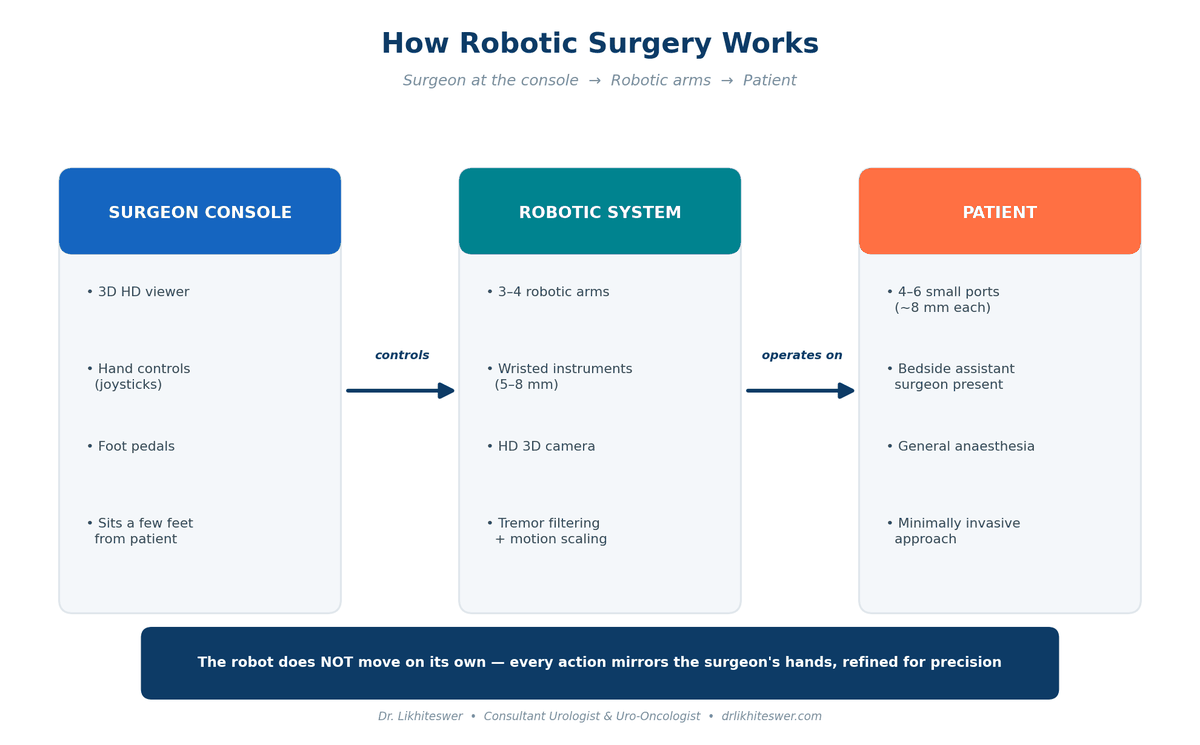
Here is what typically happens during a robotic procedure:
Step 1: Small Incisions (Ports)
Just like in laparoscopy, the surgeon makes a few small incisions on the patient’s abdomen. These are usually around 8 mm in size, because the robotic instruments are slim — only about 5–8 mm thick.
The number of incisions, called ports, depends on the type of surgery being done. Most robotic procedures require 4 to 6 ports.
Step 2: Docking the Robot
The robotic arms are then connected (docked) to special tubes called cannulas that are placed through these incisions. Specialised robotic instruments and a 3D high-definition camera are then inserted through the ports.
Step 3: The Surgeon at the Console
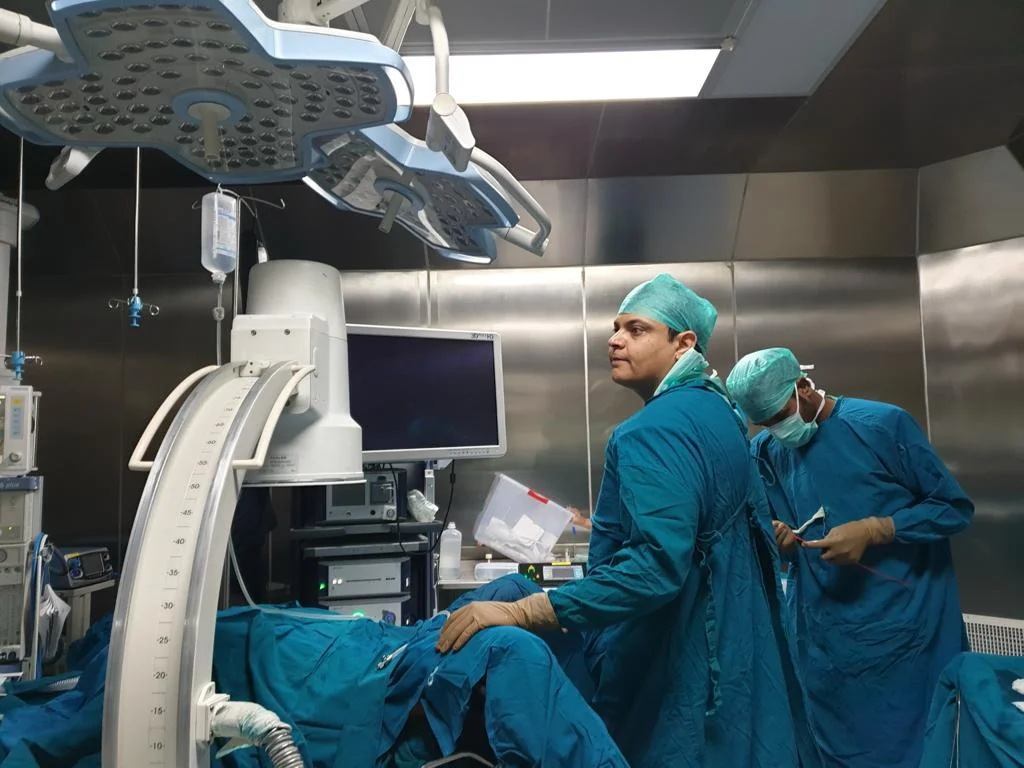
The surgeon then moves to the console, which sits a short distance from the operating table. Looking through a 3D viewer, the surgeon controls the robotic arms using hand and foot controls. Every motion is filtered for tremor and scaled down, giving the surgeon a level of precision that is difficult to achieve with the human hand alone.
Step 4: The Bedside Assistant Surgeon
A robotic surgery is never a one-person job. Alongside the main surgeon at the console, there is always an assistant surgeon stationed at the bedside. The assistant’s role includes:
- Removing and replacing instruments on the robotic arms as needed
- Introducing sutures, clips, and other materials
- Suctioning, retracting, and providing additional support
- Ensuring the patient’s positioning and safety throughout the procedure
Together, the console surgeon and the bedside assistant form a coordinated team that makes complex robotic procedures possible.
Benefits of Robotic Surgery for Patients
Although the specific benefits depend on the type of surgery and your overall health, robotic surgery generally offers:
- Smaller incisions and minimal scarring
- Reduced blood loss during surgery
- Less post-operative pain
- Shorter hospital stay
- Faster return to normal activities
- Greater precision in delicate anatomical areas, especially the pelvis
- Better visualisation with 3D magnified vision
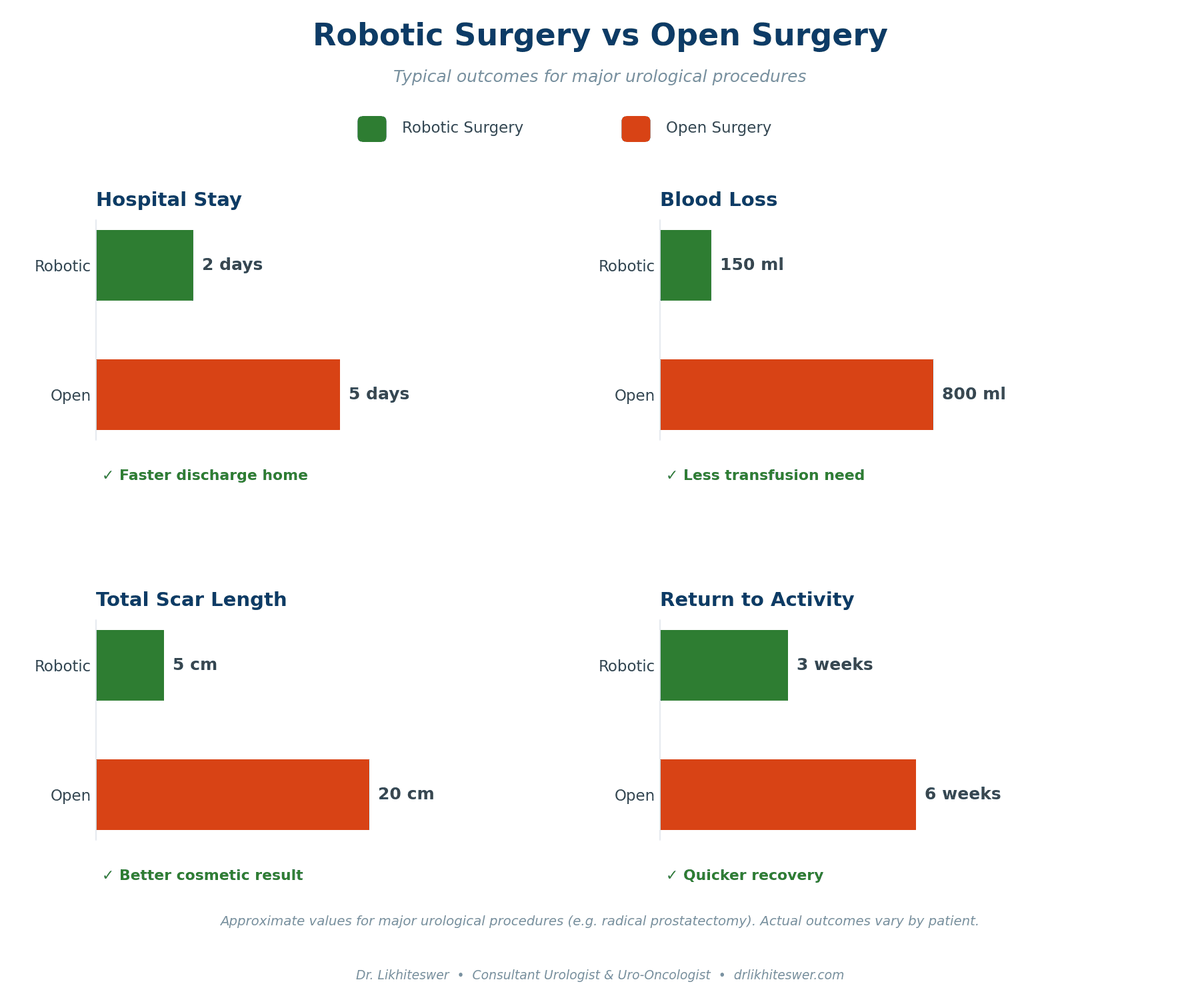
These advantages are particularly meaningful in urological cancer surgeries, where preserving important functions (such as continence and sexual function) is just as important as removing the disease.
Common Urological Procedures Done Robotically
In urology, robotic surgery has become the preferred approach for many complex procedures, including:
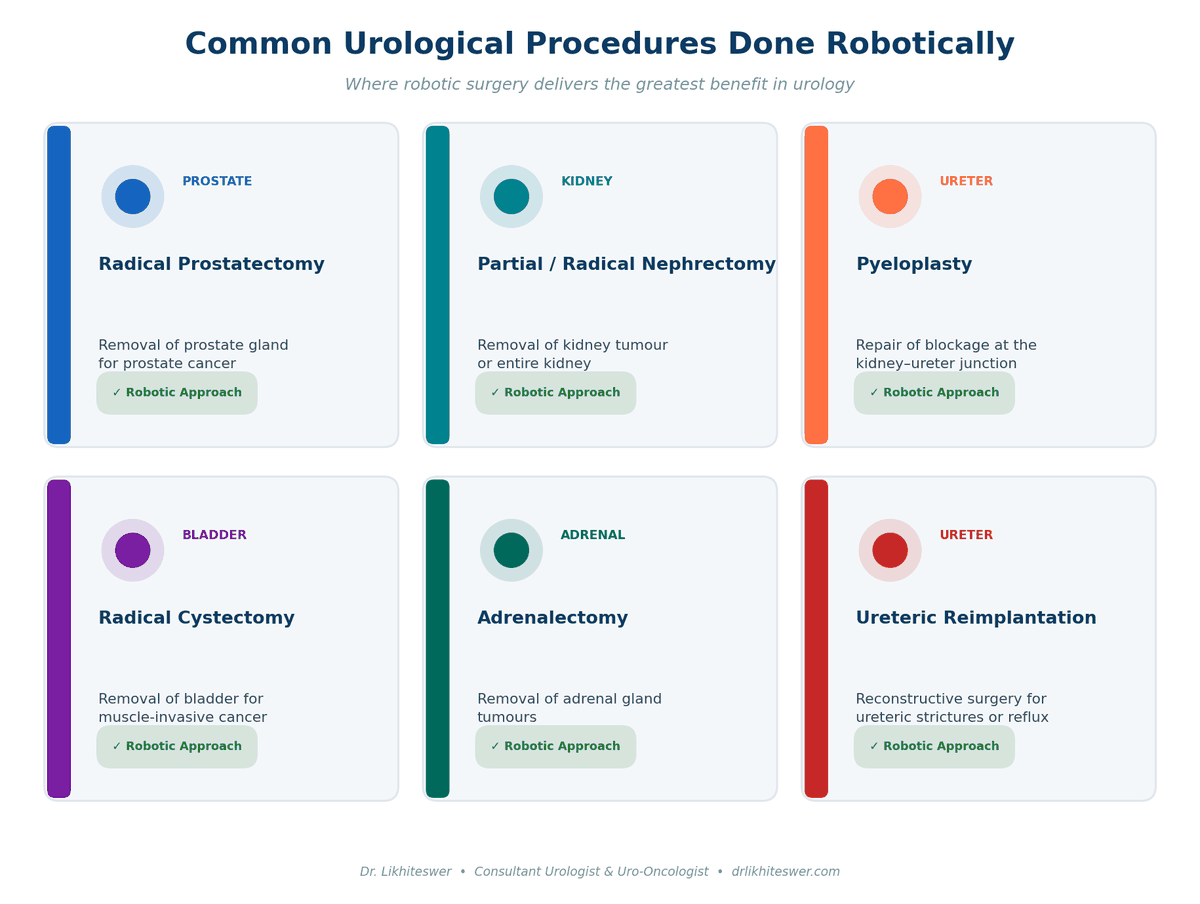
- Robotic radical prostatectomy — for prostate cancer
- Robotic partial or radical nephrectomy — for kidney tumours
- Robotic pyeloplasty — for blockage at the kidney–ureter junction
- Robotic radical cystectomy — for bladder cancer
- Robotic adrenalectomy — for adrenal gland tumours
- Robotic ureteric reimplantation and other reconstructive procedures
What to Expect Before and After Robotic Surgery
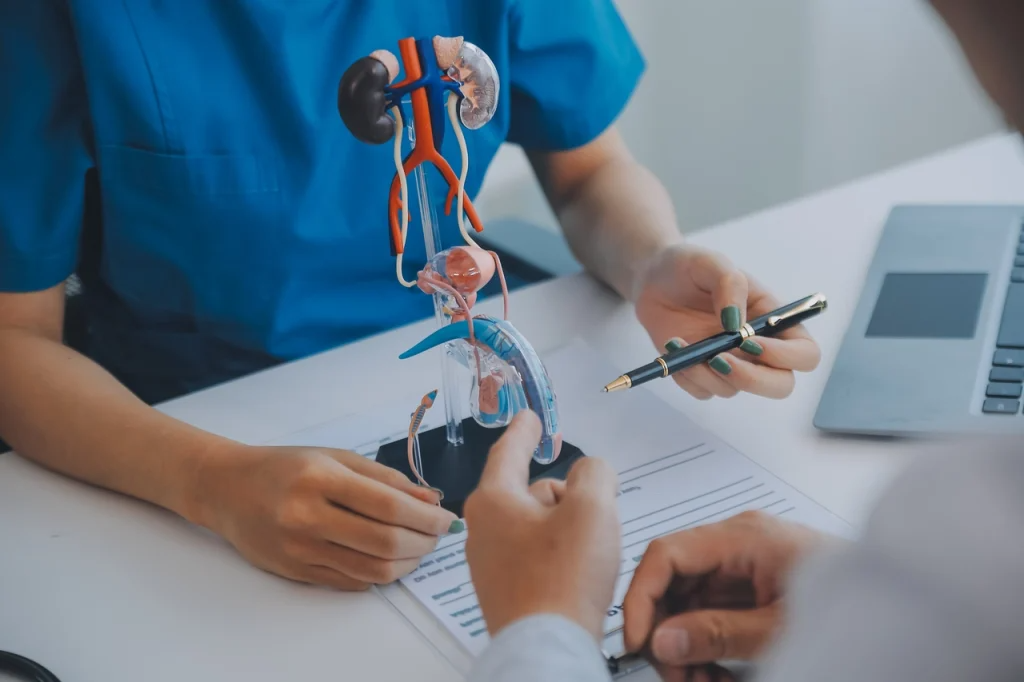
Before robotic surgery, you will have a detailed consultation where your surgeon will review your scans, blood tests, and overall health. Anaesthetic and pre-operative assessments are similar to any other major surgery.
After the procedure, most patients are encouraged to start sipping fluids and gently moving within a few hours. Hospital stay is generally shorter than open surgery — often between 1 to 3 days — and most patients can resume light daily activities within 2 to 3 weeks, depending on the type of surgery.
Frequently Asked Questions About Robotic Surgery
Is the robot doing the surgery on its own?
No. In master-slave systems (the most widely used), the robot only moves when the surgeon moves the controls. It does not take independent decisions or perform movements on its own.
Is robotic surgery safer than open surgery?
For many procedures, robotic surgery has been shown to offer less blood loss, fewer wound complications, and faster recovery compared to open surgery. However, the best approach for you depends on your specific condition, and your surgeon will recommend the safest option after a complete evaluation.
How long does recovery take after robotic surgery?
Recovery is generally faster than open surgery. Most patients are discharged within 1–3 days, depending on the procedure, and can return to light activities within 2–3 weeks.
Are robotic surgeries available in India?
Yes. Many leading hospitals in India, including in Hyderabad, now offer advanced robotic surgical platforms such as Da Vinci and SSI Mantra for urological and other procedures.
Will I have a large scar after robotic surgery?
No. Robotic surgery uses 4 to 6 small incisions of around 8 mm each, which heal into very small, often barely visible scars compared with the long single incision of open surgery.
Final Thoughts
Robotic surgery is one of the most exciting advances in modern medicine. It combines the precision of technology with the judgement and experience of a trained surgeon, to give patients the best possible outcomes through the smallest possible incisions.
If you have been advised to undergo a urological procedure and want to know whether robotic surgery is the right option for you, feel free to reach out for a consultation.
— Dr. Likhiteswer, Consultant Urologist and Uro-Oncologist, Hyderabad